
Introduction
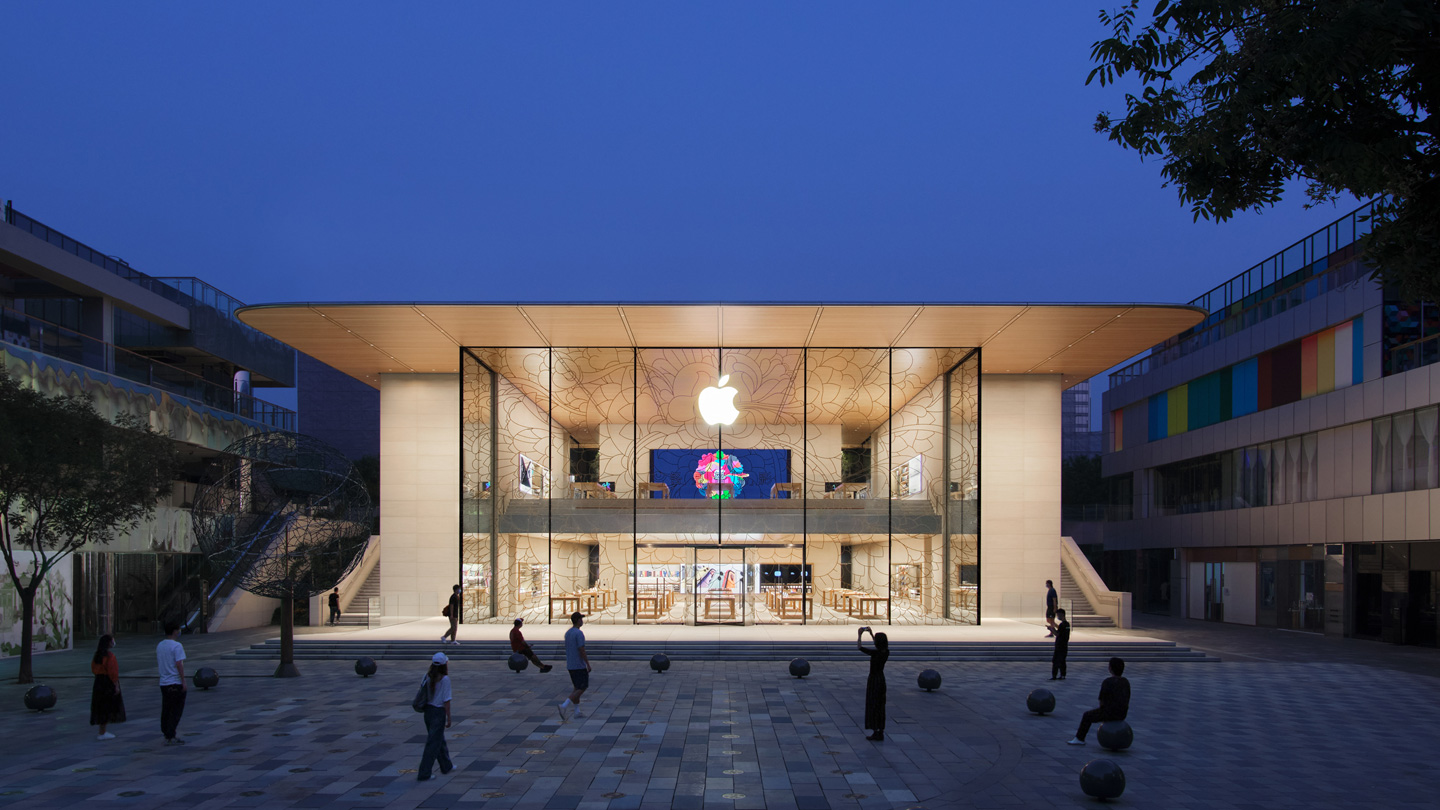
Tech-giant Apple has opened yet another massive flagship store in China — this time in Beijing’s upscale shopping district Sanlitun. The timing of the launch is notable because it coincides with pointed criticism from U.S. Attorney General William Barr regarding Apple’s relationship with China. (TechCrunch)
This move sheds light on how Apple is navigating global growth, geopolitics and local market dynamics — making the new store more than just a retail expansion.
What’s new in the store
- The new Sanlitun store replaces Apple’s original China store at the same location (opened in 2008) and is more than twice as large as the previous flagship. (TechCrunch)
- It features Apple’s first integrated solar array in a Chinese retail location — aligning with the company’s long-term push on renewable energy. (TechCrunch)
- Over the last 12 years, the old Sanlitun store went from around 52 staff to 185, and attracted over 22 million visitors. (TechCrunch)
- This expansion sends a signal of confidence in the Chinese market, despite mounting competitive pressure from local smartphone makers. (TechCrunch)
Why China matters for Apple
- China is not only a major sales market for Apple’s products (iPhone, iPad, Mac, services) but also a critical part of its manufacturing and supply-chain ecosystem. (computerbuilderinfo.com –)
- According to market research cited by TechCrunch, Apple holds only about 10% of the Chinese smartphone shipments market at the time of the article, placing it around fifth among competitors in China. (TechCrunch)
- Hence, expanding its retail footprint in China serves both branding and operational purposes — making the company’s presence more visible and accessible.
The William Barr criticism
- In his speech, William Barr accused Apple (among other U.S. tech companies) of being “acquiescent to the Chinese Communists,” arguing that the company had removed Chinese‐government‐sensitive apps and complied with Chinese regulatory demands in ways that contrast with its stance in other markets. (TechCrunch)
- Barr specifically pointed to instances where Apple pulled apps from its App Store in China, including a case tied to Hong Kong protest mapping, and questioned whether iPhones in China are “impervious to penetration by Chinese authorities.” (computerbuilderinfo.com –)
- In light of such criticism, Apple’s decision to open a megastore in China appears to highlight its willingness to continue investing in the Chinese market — despite the political scrutiny overseas.
The balancing act: business, ethics & geopolitics
- Apple faces a complex challenge: on one hand the profits and market opportunity in China; on the other, reputational and ethical scrutiny from home (USA) and elsewhere.
- By opening a large retail presence in China immediately after public criticism, Apple seems to emphasise business continuity over symbolic retreat. But this could also raise questions about how the company balances principles (privacy, free expression) with pragmatism (market access, growth).
- The solar array at the new store also signals corporate responsibility (environment) even as the company navigates regulatory and political pressures.
Implications & what to watch
- For consumers: A larger, modern flagship store means more space to explore devices, services and experiences — in a premium market such as China.
- For Apple’s brand: Reinforcing presence in China can strengthen brand loyalty and local-market relevance — but could also expose the company to increased scrutiny regarding its operations and values.
- For the industry: The move underscores how major tech companies must make strategic bets in key geographies — often weighing growth vs. regulatory risk vs. public perception.
- For geopolitics: Apple’s actions will likely be monitored by policy makers, shareholders and public interest groups, especially in the context of U.S.–China tech tensions.
Conclusion
The opening of Apple’s “megastore” in Beijing’s Sanlitun is more than a retail story — it is a strategic statement. It demonstrates Apple’s commitment to China as a market and operational hub, even amid mounting political criticism from home. As the company treads through this complex environment of market opportunities, national priorities and corporate values, this store stands as a symbol of how global tech firms are forced to play in multiple arenas at once.